Review digest
Microneedling Reviews: At-Home vs the Pros, What Dermatologists Say
An at-home Dr. Pen style device runs about $90 up front plus ongoing replacement cartridges, while a single professional microneedling session costs roughly $200 to $700 and is usually sold in packages of three to six. Reviewers love debating whether the at-home version does anything, but almost none of them do the math on when the cheaper tool pays for itself. This digest is a cost comparison only, not medical advice.
Reviews are summarized and linked; each verdict is the creator's own. We are not affiliated with these channels.
The reviewers
What each one concluded
 12:33
12:333.2M views
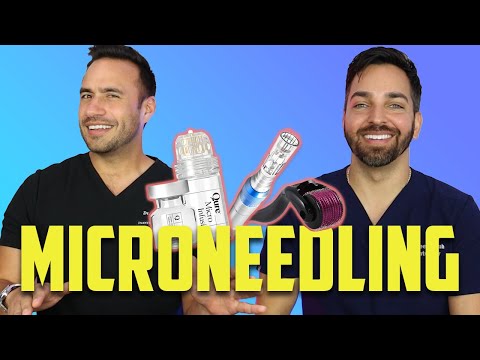
Two board-certified dermatologists say microneedling does trigger collagen and can help scars, lines and texture, but the strongest results come from deeper in-office needling. At-home rollers and pens are milder tools that are fine with sterile technique and modest expectations.
They warn a dermaroller drags and tears skin more than a controlled stamping pen, and at-home depth stays shallow versus the numbed, deeper passes done in the office.
Watch the verdict at 12:33 on YouTube 6:30
6:30331K views
A board-certified dermatologist is skeptical that shallow at-home devices remodel collagen the way deeper in-office microneedling does. She frames them as surface-level tools that mainly help products absorb, not a real fix for scars or deep wrinkles.
She puts at-home devices around 0.2 to 0.5mm and reserves anything past roughly 1.5mm, which requires numbing, for the professional setting.
Watch the verdict at 6:30 on YouTube 10:00
10:00142K views
A board-certified dermatologist would skip at-home microneedling for most people, saying shallow devices rarely make a real dent in deeper scars or wrinkles. She views the depth achieved in-office as what drives meaningful collagen change.
She notes at-home devices rarely exceed about 0.5mm while professional passes reach roughly 0.5 to 2.5mm and aim for pinpoint bleeding, with home use carrying infection and bleeding risks.
Watch the verdict at 10:00 on YouTube 14:00
14:00104K views
A board-certified dermatologist microneedles her own face at home and concludes it is a far more comfortable and cheaper alternative to in-office sessions. She is upfront that results come slower and hinge on careful, precise technique.
She stresses a stamp-and-lift motion with no dragging, a conservative needle depth, and months of consistent use before any visible change appears.
Watch the verdict at 14:00 on YouTube 8:00
8:00102K views
A licensed master esthetician argues that an inexpensive stamping tool plus serums you already own beats pricey branded micro-infusion systems. She figures the budget approach delivers similar at-home benefit for a few dollars a session instead of $50-plus.
She favors solid titanium or stainless steel needles over hollow gold ones and disinfecting in 70% alcohol, calling shallow cosmetic needling safe when done correctly.
Watch the verdict at 8:00 on YouTube 14:02
14:02114K views
After five years of at-home dermastamping, this reviewer says her skin looks brighter, plumper and smoother and calls it worth it. She is clear that at-home 0.5mm needles are gentler than the 1.5mm depths used in the clinical studies people cite.
Her main cautions are replacing needles often (she swaps roughly every eight uses), disinfecting properly, and avoiding harsh actives right after a session.
Watch the verdict at 14:02 on YouTubeWhere they agree
- +Microneedling works by controlled micro-injury that prompts collagen; the underlying principle is sound.
- +At-home devices stay shallow (about 0.2 to 0.5mm); deeper 1.5mm-plus work belongs in-office with numbing.
- +Sterile technique matters: fresh needles, 70% alcohol, stamp instead of drag, no harsh actives right after.
- +At-home is far cheaper and more convenient, but results are slower and more modest.
- +The best at-home wins are texture, glow and product penetration, not deep acne scars.
Where they split
- /Whether shallow at-home needling remodels collagen or only improves product absorption.
- /Whether at-home is worth doing at all versus saving up for in-office sessions.
- /Dermarollers vs stamping pens vs pricey micro-infusion systems as the best home tool.
Our take
The reviewers split on results but agree at-home needling is the budget play; the open question is how many $300 pro sessions your $90 device replaces before cartridge costs pile up. If you mainly want glow and smoother texture, the at-home math tends to win, while deep scarring is where the pros still earn their price. Run your own numbers in the microneedling at-home vs professional cost calculator. Cost comparison only, not medical advice.
We may earn a commission from these links, at no cost to you. Prices vary by retailer.
Go deeper
Related guides
- At-Home vs the Pros: What's Worth Switching (and What Isn't)Whether you can do a treatment at home has three honest answers, not one. We sort every treatment we cost out into switch-confidently, switch-with-eyes-open, and keep-the-pro, based on the reviews and the money.
- At-Home Skin Devices, Costed: LED, Microneedling and DermaplaningAt-home skin devices raise two questions: does the home version do enough, and does the price beat the pro? We answer the cost side, with the evidence pointing to our sources. Cost comparison only, not medical advice.
- Beauty Device Sales: When a Discount Changes the MathA percentage off a Dyson Airwrap or IPL handset only matters if it moves the break-even point. How to judge a device sale by payback and running costs, not the size of the markdown.
Related reading
Related articles
- How Much Does Microneedling Cost in 2026? (Standard vs RF vs PRP)What professional microneedling costs per session in 2026, and how it compares to an at-home setup.
- How Often Should You Replace a Derma Roller (and Yearly Cost)Derma rollers last about 8-12 uses. The real per-year replacement cost vs single-use pen cartridges.
- Dr. Pen vs SkinPen vs Derma Roller: Cost ComparisonA total cost-of-ownership breakdown of Dr. Pen, SkinPen, and derma rollers in 2026: device, cartridges, and yearly spend.
- The Real Cost of Microneedling Consumables (2026)Cartridges, numbing cream, and aftercare serums add up fast. See what microneedling consumables cost per session and per year.
Keep reading
More review digests
 6 reviews
 4 reviews
 5 reviews
 5 reviews